Skip to content

A salt air concrete coating shoreline homeowners can count on does one main thing. It seals the slab so salt, sand, and moisture stay on top where they can be cleaned off, instead of soaking into porous concrete. Along Long Island Sound, garages, mudrooms, and basements face all three every season. We plan shoreline floors with that in mind, using the systems on our residential services page for homes in Madison, Guilford, and Branford.
Life by the water is wonderful. It is also hard on bare concrete in ways inland homeowners rarely notice.
Salt Air Exposure On Shoreline Slabs
Salt travels on the breeze near the water and settles on cars, tools, and floors. It also arrives on tires and shoes after a walk on the beach. Bare concrete is porous, so salty moisture soaks into it.
As that water dries, salt crystals form inside the surface pores. Repeated cycles can roughen and weaken the top layer of a bare slab over time. You may see white crusting, flaking, or a sandy feel underfoot.
Winter adds a second dose. Brine pretreatment on state highways is standard practice for CTDOT, and shoreline drivers carry that residue home from Route 1 and I-95 all season.
Salt Air Concrete Coating Shoreline Homes Use
A sealed, non porous surface is the defense. Salt and moisture stay on top, and a rinse or squeegee clears them. Nothing builds up inside the concrete.
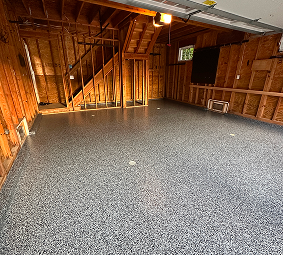
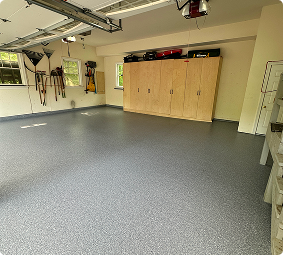
For garages, a flake system with a protective topcoat is a common choice. It hides sand between cleanings and adds texture for wet feet. For mudrooms and entries, a fine quartz texture adds even more grip.
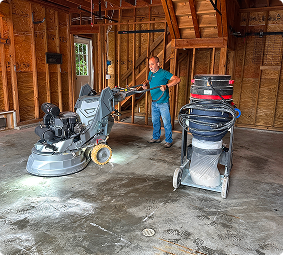
The key is bond. Grinding opens the slab so the base coat grips deep, which matters even more where moisture is constant.
Salt Air Corrosion Concrete Owners Notice
Salt does more than mark the floor. Tools, bike chains, and metal shelving in shoreline garages rust faster, and the concrete under them can show white rings and rough patches. A sealed floor will not protect the tools, but it stops that salty moisture from settling into the slab under them. Storing metal items off the floor and wiping them down helps both.
If your bare slab already shows flaking, the damaged layer gets ground away and repaired before any coating goes down.
Beach Sand Abrasion In Garages
Sand is fine, hard grit. On a bare slab, it gets ground in by tires and shoes. On a coated floor, it acts like sandpaper on the topcoat if it sits for weeks.
The fix is simple. Keep a stiff broom and a mat by the door and sweep often in summer. Rinse sandy gear outside before it comes into the garage. A busy, mid tone flake blend hides the sand that does get in between cleanings.
Wet rooms need traction most, and quartz flooring for wet rooms is the grippier option we suggest for outdoor showers, pool houses, and mudrooms.
Coastal Humidity And Sweating Floors
Humid summer air meets cool concrete, and condensation forms. Shoreline basements and garages see it often. Federal mold guidance from the EPA puts the indoor target under 60 percent relative humidity, with 30 to 50 percent as the sweet spot, and treats sweating surfaces as a warning sign.
A sealed floor will not stop humid air, but it keeps moisture on the surface where it dries and cleans up easily. A dehumidifier in the basement and good ventilation in the garage help a lot.
Moisture testing before coating is not optional near the water. A slab pushing vapor from below needs a different plan than one that only sweats in July.
Shoreline Garage Epoxy Timing
Coatings need suitable temperature and humidity to cure well. Shoreline summers can be muggy, and fall often brings the most comfortable install days. We watch the forecast and the dew point and schedule around conditions that let the floor cure properly instead of rushing a humid week.
Spring works well too, once nights warm up. Booking ahead of beach season means the garage is ready before the sand starts coming home.
Flood Zone Thinking For Low Garages
Some shoreline garages sit in flood zones. FEMA flood resistant materials guidance in Technical Bulletin 2 lists concrete as acceptable and rates formed in place epoxy flooring as acceptable for floors. That matters if your garage or lower level sits below the base flood elevation.
Ask your local building department about the rules for your property. We can explain how a coated slab fits into those plans, but flood compliance decisions belong with them.
Living on the shoreline and wondering what your floors need? A free estimate or a call to 475-233-1311 gets you a straight answer.
Floors For Beach House Mudrooms And Entries
Mudrooms take wet towels, flip flops, sandy dogs, and boots in every season. A seamless coated floor with texture handles all of it and wipes clean. No grout lines to hold sand.
Outdoor showers and covered entries can be coated too, with exterior rated systems and texture planned for wet bare feet. Drainage and slope get checked before anything goes down.
Coastal Home Floor Coating CT Care Routine
A shoreline floor stays in shape with a short routine. Sweep sand weekly in summer and after beach days. Rinse and squeegee salt film during winter thaws. Wipe up pool chemicals and fertilizer spills right away. Mop with a mild, neutral cleaner instead of harsh acids.
Check the floor each spring. Look at tire paths, door thresholds, and the edges along walls where moisture gathers. Small wear spots are easy to refresh before they spread.
Store salt, sand, and pool chemicals in sealed bins off the floor. Leaky bags leave crusty rings that are a chore to clean even on a sealed surface.
Sealed Surface Defense For Lower Levels
Shoreline basements and walkout lower levels need the same sealed defense as garages, plus attention to moisture. Testing the slab first tells us whether vapor is coming up from below. When it is, the plan changes before any coating is chosen.
Madison, Guilford, And Branford Homes
Homes near the beaches in Madison deal with sand most of the summer. Guilford has historic homes and older slabs that need careful prep. In Branford, many waterfront and near water houses have lower levels and garages that see humidity year round.
For a closer look at how long a sealed floor should last in conditions like these, read our guide to how long coated floors last in Connecticut.
Shoreline Floor Questions
Does salt air degrade garage and basement floors?
It can wear bare concrete over time. Salt settles on surfaces and soaks into porous slabs with moisture, then crystallizes as it dries, which can roughen the top layer. Once the slab is sealed, that salt stays up top, and a quick rinse sends it out the door.
Will tracked beach sand scratch a coating?
Sand left for weeks can dull a topcoat in high traffic paths. Regular sweeping, a mat at the door, and rinsing gear outside keep it from building up. A busy mid tone flake blend also hides the small amount that gets in between cleanings.
How does coastal humidity affect concrete?
Humid air condenses on cool slabs, leaving floors damp and sometimes musty. The EPA suggests keeping indoor humidity below 60 percent. A sealed floor keeps that moisture on the surface, and a dehumidifier plus good ventilation handle the air itself.
What floors suit beach house mudrooms?
Seamless coated floors with texture work best. A fine quartz or textured flake system grips wet feet, hides sand, and wipes clean with no grout lines. Pair the floor with a boot tray, hooks, and a durable mat at the door for an easy routine.
Do you service the Madison and Guilford shoreline?
Yes. Madison, Guilford, and Branford are all on our listed service area. Shoreline estimates follow the same six step process as every EpoxyMize project, starting with an on site visit where Jesneil checks the concrete, tests for moisture, and notes any repairs.
Can outdoor showers and entries be coated?
Yes, with exterior rated systems and texture planned for wet bare feet. We check drainage and slope first so water runs off rather than pooling. Covered entries and porches get the same planning, with attention to sun exposure and freeze thaw conditions.
Book A Coastal Home Estimate
Shoreline living brings salt, sand, and humidity to every floor. A sealed surface turns those problems into a quick rinse.
Coastal home estimates along the shoreline run weekly, so book one for your Madison, Guilford, or Branford home through our estimate form or at 475-233-1311.