Skip to content

How long does epoxy floor last in a Connecticut home? Our answer on the site is 10 to 20 years with proper prep and professional installation, for both epoxy and polyaspartic systems. That is a wide range for a reason. Where a floor lands depends on prep, traffic, sunlight, moisture, and how it is cleaned. This post explains each factor honestly so you can see where your floor would likely fall, using what we see on residential projects in Fairfield, Danbury, and West Hartford.
How Long Does Epoxy Floor Last By Room
Not every room ages the same way. A garage takes hot tires, road salt, dropped tools, and wet slush. A basement sees light foot traffic but may deal with moisture from below. A living room or kitchen faces furniture and daily cleaning but little else.
Garages usually work the hardest, so they tend to show wear first in tire paths and near the door. Basements often look new for years if moisture was handled before coating. Interior rooms can land near the top of the range when they are cared for.
Prep Quality Dividend
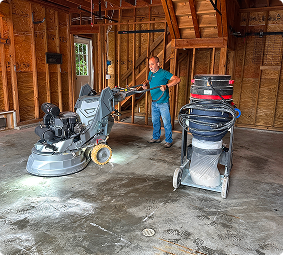
Prep is the single biggest lifespan factor, and it is decided on day one. A floor that was ground, repaired, and tested properly bonds into the concrete. A floor rolled onto a dusty, unground slab sits on top and can let go.
That is why every EpoxyMize job starts with grinding to profile the concrete, crack and surface repair, and moisture checks. You pay for prep once, and it pays you back every year the floor stays bonded.
The Trumbull customer in one of our reviews had a garage coating that lasted about 20 years before it was faded and chipped. That puts it at the far end of the range, and it shows that even a long lived coating eventually reaches the point of replacement.
Floor Coating Wear Factors To Watch
Traffic is the obvious one. Daily cars, rolling toolboxes, and heavy equipment wear a topcoat faster than foot traffic alone.
Road chemicals matter in Connecticut. Every storm, the brine and chlorides described by CTDOT hitch a ride on your tires. Salt left to dry for months can dull a topcoat. Rinsing and squeegeeing during the season slows that down.
Sunlight matters in bright garages and sunrooms. UV exposure can yellow some coatings over time.
Polyaspartic Floor Longevity In Sun
Aliphatic polyaspartic topcoats resist UV well. The polyaspartic ester summary notes that coatings made with aliphatic isocyanates are UV and light stable with low yellowing tendency. For a garage with west facing doors or big windows, that top layer helps the floor keep its color.
Garage And Basement Floors Age Differently
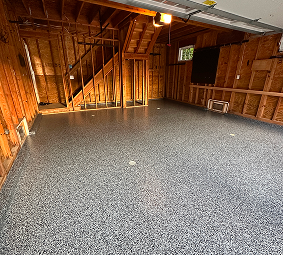
A garage ages from the top down. Wear shows in the topcoat first, in tire paths, at the door, and under the workbench. That kind of wear can often be refreshed without starting over.
A basement ages from the bottom up if moisture is the problem. Vapor pressure from the ground can push on the coating from underneath. That is why moisture testing before a basement coating matters so much.
Want an honest read on how your floor would age? Put that question on the table at a free estimate, or ask it by phone at 475-233-1311.
Signs Your Floor Is Aging Well
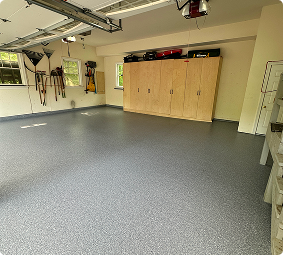
A healthy coated floor still beads water, cleans up with a mop, and shows even color from wall to wall. Light surface scratches in tire paths are normal and do not mean failure. What you do not want to see is lifting at the edges, bubbles, or bare concrete showing through. Those point to bond or moisture problems that need a closer look.
Recoat Cycle Timing
A recoat is a fresh topcoat over a floor that is still well bonded. It restores gloss, color, and protection where traffic has worn the surface. Timing depends on use, and many floors go years before needing one.
Watch for dull lanes where tires roll, light scratches that catch dirt, or a topcoat that no longer beads water. Those are signs the top layer is getting thin. Catching that early keeps the base layers safe.
Replacement is different. If the coating is peeling, lifting, or chipping down to bare concrete, the bond has failed. That floor gets ground off and rebuilt, the way the Trumbull garage was stripped and recoated in two days.
What A Recoat Involves
A recoat starts with a deep clean and a light sanding or screening of the old topcoat so the new layer can grip. Damaged spots get repaired first. Then a fresh topcoat goes down. It is a much smaller job than a full replacement, and it brings back the gloss and protection a busy garage wears away.
Warranty Vs Lifespan
A warranty and a lifespan are not the same thing. Lifespan is how long the floor is expected to perform. A warranty is the written coverage for specific problems for a specific time. Every EpoxyMize project includes warranty coverage for prep, materials, and workmanship, and the papers come at the final walkthrough with Jesneil. Read about our approach on the about page.
When comparing quotes, read what each warranty covers and what it excludes. A long promise with vague terms is worth less than a clear one.
Coating Lifespan Connecticut Climate Adds
Connecticut winters bring freeze and thaw cycles, salt, and slush for months. Summers bring heat, humidity, and bright sun through open garage doors. A floor here needs to handle both.
Bare concrete takes the worst of it. Water soaks in, freezes, and expands, and salt adds more stress at the surface. A sealed coating keeps most of that water and salt on top, which protects the slab underneath as well as the finish.
Humidity adds a quieter challenge in basements and shoreline homes. Condensation on cool slabs leaves floors damp, and moisture from below can push on a coating. Testing and dehumidifying protect the investment.
Simple Habits That Add Years
Sweep grit often, especially in winter. Rinse salt during thaws. Use mild cleaners instead of harsh acids. Put mats at doors and pads under heavy stands. Wipe up spills like brake fluid quickly.
Shoreline homes have their own challenges, which our guide to salt air floor coatings covers.
Floors In Fairfield, Danbury, And West Hartford
Coastal Fairfield garages deal with sand and salt air on top of road brine. Danbury garages often see long commutes and heavy winter driving. In West Hartford, older detached garages and basements put prep and moisture first. Each one can reach the long end of the range with the right start.
Coated Floor Lifespan Questions
How many years does a professional coating last?
With proper prep and professional installation, epoxy and polyaspartic coatings can last 10 to 20 years under normal residential use. Where a floor lands in that range depends on traffic, prep quality, sunlight, moisture, and cleaning habits. Interior rooms can reach the long end.
What shortens a coated floor life fastest?
Poor prep shortens life more than anything else. A coating that never bonded into ground concrete can peel early. After that, moisture from below, salt left sitting for months, heavy unprotected point loads, and harsh cleaners do the most damage over time.
Do garage and basement floors age differently?
Yes. Garages wear from the top down, with tire paths and door areas showing first. Basements can fail from the bottom up if moisture pushes on the coating. Moisture testing before a basement install and regular care in a garage address each risk.
When does a floor need recoating vs replacement?
If the floor is still bonded but dull or lightly scratched, a fresh topcoat can restore it. If it is peeling, lifting, or chipping to bare concrete, the bond has failed, and the coating needs grinding off and replacement, like the Trumbull garage we stripped and recoated in two days.
Does the warranty match the expected lifespan?
They measure different things. A warranty covers specific problems for a stated time, while lifespan is how long the floor is expected to perform. EpoxyMize includes warranty coverage for prep, materials, and workmanship, and the papers you receive at the final walkthrough spell out the terms.
How does prep quality change longevity?
Prep decides whether a coating grips the concrete or just sits on it. Grinding, crack repair, and moisture testing create a strong bond that holds for years. Skipping them can cut a lifespan short, even with a premium product on top.
Get Lifespan Honest Guidance
A floor that lasts starts with an honest conversation about your slab, your use, and your expectations.
Buy a floor once, and get lifespan honest guidance free. Fairfield, Danbury, and West Hartford homeowners can request an estimate or reach Jesneil at 475-233-1311.