Skip to content
Quartz flooring in Connecticut is one of our strongest options for rooms where wet feet, dripping clothes, muddy shoes, and frequent cleaning are normal. A quartz broadcast floor places hard decorative aggregate into a resin coating to create more surface texture than a smooth epoxy floor. That extra bite makes it especially useful in pool houses, laundry rooms, mudrooms, changing areas, and similar wet spaces.
The key is not simply making a floor rough. We adjust the system around how wet the room gets, how people use it barefoot, how easily it needs to be cleaned, and where water travels across the concrete.
Why Wet Rooms Need A Different Floor
Water changes how a floor needs to perform. A pool house in Madison may see children walk directly inside with wet feet. A Guilford laundry room can deal with damp clothing, utility-sink splashes, and occasional appliance leaks. A Westport mudroom gets rainwater, wet shoes, grit, and snow residue carried inside through Connecticut winters. A smooth coating can still protect concrete, but more surface texture becomes useful once repeated wet traffic enters the picture. Our quartz flooring systems use colored aggregate within a resinous floor build. This creates a dense, textured surface instead of relying only on a smooth topcoat for the finished walking surface.
How A Quartz Broadcast Floor Is Built
A quartz broadcast floor system is not made from quartz tiles or loose stone.
The process starts with properly prepared concrete. A resin coat receives decorative quartz aggregate while the material is still open. Depending on the selected system, another resin layer and quartz broadcast may follow before the floor receives its grout and protective finish.
Commercial resin manufacturers use the same basic approach. Sika describes decorative quartz systems as seamless broadcast epoxy floors with quartz aggregate and clear topcoats. Its systems can also be adjusted to provide different levels of slip resistance.
The finished surface has far more texture and color depth than plain solid-color epoxy.
Quartz Creates Grip Through Surface Texture
Wet traction does not come from the word “quartz” alone.
It comes from the aggregate profile that remains at the walking surface after the system is sealed. More exposed texture can provide stronger footing, while a heavier grout or topcoat can create a smoother feel.
That gives us room to tune the surface for its actual use.
A utility wash area may benefit from a more aggressive texture. A residential pool house used barefoot needs a more careful balance between wet traction and comfort. A laundry room may need less texture because easy sweeping and mopping matter more than maximum grip.
Sherwin-Williams describes its decorative quartz flooring as a seamless system whose textured finishes can aid traction even under wet conditions.
Pool Houses Put Quartz In Its Best Environment
Pool houses combine several flooring problems in one room.
Water follows swimmers through doors. Towels sit on the floor. Bare feet repeatedly cross the same routes. Sunscreen and pool residue can reach the surface. Furniture, storage bins, coolers, and cleaning products add another level of wear.
Quartz works well here because texture is built throughout the decorative broadcast rather than added as an afterthought.
The seamless finish also removes tile-style grout lines from the main floor area. Water and dirt remain on a cleanable coating surface instead of settling into numerous joints.
For adjoining outdoor areas, our pool deck coatings can be planned around the different demands of sun exposure, standing water, bare feet, and Connecticut freeze-thaw weather.
Pool House Floors Need Texture In The Right Places
More texture is not always better.
Think about the path from a pool door to a changing area. Water may concentrate in that narrow route while the far side of the room stays comparatively dry. Door thresholds and areas beside benches may also stay wetter because people stop there.
Those traffic patterns matter when we choose a finish.
A heavily textured floor can provide more grip, but it also gives dirt and fine debris more places to collect. A lightly textured floor cleans faster but may not provide the same footing in persistently wet areas.
Good wet area floor coating in CT requires finding the useful middle point instead of selecting the roughest finish available.
Is Quartz Too Rough For Bare Feet?
It does not have to be.
A residential quartz floor should not automatically feel like coarse outdoor concrete. Quartz size, broadcast density, grout coats, and the final topcoat all affect how much aggregate texture remains exposed.
Pool houses require special attention because bare feet judge a surface differently than work boots.
A floor can feel comfortable when dry but noticeably sharper once skin softens after swimming. We account for that when choosing the system rather than treating every wet room like a commercial wash area.
EpoxyMize’s existing Connecticut pool deck coatings follow the same basic logic: wet grip has to be balanced against barefoot comfort and cleanup.
Laundry Rooms Have A Different Moisture Pattern
A laundry room does not stay wet like a pool house, but water still matters.
Small detergent spills, dripping garments, utility sinks, appliance hoses, and an unexpected washer leak can all reach the concrete. Connecticut basements also deserve attention because below-grade slabs can have their own moisture conditions before the washing machine ever enters the room.
A seamless quartz floor provides a cleanable surface with extra footing around machines and sinks.
However, a floor coating is not a substitute for proper drainage or repairing an active water problem. Existing slab moisture and water intrusion need to be evaluated before coating.
When the laundry area sits below grade, our basement coatings process considers the condition of the concrete before a finished system is selected.
Mudrooms Need Grip Without Becoming Dirt Traps
Connecticut mudrooms have a different problem again.
During spring and fall, wet shoes bring grit and rain inside. Winter adds snow, slush, sand, and road residue. A Madison or Guilford entry can go from dry to messy within minutes when several people come through during bad weather.
Quartz texture can improve footing when the floor gets damp.
The tradeoff is cleaning. An overly aggressive profile can hold fine grit more tightly than necessary. Residential mudrooms often work best with controlled texture that gives wet shoes more purchase while still allowing routine vacuuming and mopping.
This is one reason we do not specify quartz by room name alone.
Water Resistance Starts With A Seamless Build
Quartz aggregate itself is only part of the system.
Once broadcast quartz is locked into resin and sealed correctly, the finished floor forms a continuous surface over prepared concrete. Sika describes its quartz epoxy systems as seamless and impermeable, while Sherwin-Williams lists decorative quartz systems built around continuous resin layers and sealed topcoats.
That structure matters in rooms where small amounts of water hit the floor repeatedly.
Water stays at the finished surface instead of soaking directly into bare concrete. Cleanup also becomes easier because there are no grout joints across the main field of the floor.
The system still needs sound concrete beneath it. Floor drains, wall transitions, penetrations, active cracks, and moisture from below require separate attention during project planning.
Quartz Vs Flake In Wet Connecticut Rooms
Flake and quartz can both create attractive textured floors, but they produce different surface characteristics.
Flake systems use thin decorative chips. Quartz systems use mineral aggregate, giving the surface a denser and generally more pronounced texture. EpoxyMize’s own quartz service guidance positions quartz toward damp entries, laundry areas, and spaces that need more grip.
Flake may make more sense where the owner wants a softer residential appearance and easier cleanup.
Quartz becomes more compelling as regular water exposure and traction needs rise.
A pool house floor and an ordinary finished basement therefore should not automatically receive the same coating.
Where Quartz Beats Smooth Epoxy
Smooth epoxy has advantages. It cleans quickly, creates a sleek appearance, and works well in many dry interior environments.
The weakness appears when water regularly reaches the walking surface.
Smooth resin can become less forgiving under wet bare feet or wet footwear. A slip-resistant quartz system adds physical texture to the floor, which changes how the foot interacts with the surface.
Quartz therefore becomes especially useful beside pool entrances, laundry sinks, changing rooms, wet mudroom doors, and similar transition areas.
The decision still needs to account for cleaning. Maximum texture would be unnecessary in many residential rooms.
Pool Chemicals Require The Right Topcoat
Pool water contains treatment chemicals, while stored pool products can be much more concentrated.
A quartz system can be designed with chemically resistant resin layers and topcoats. Sika describes decorative quartz systems with mechanical and chemical resistance, and Sherwin-Williams similarly specifies wear- and chemical-resistant finishes in its quartz flooring systems.
No residential coating should be treated as immune to every chemical at every concentration.
Connecticut’s Department of Public Health also stresses proper storage and handling of chlorine-containing pool chemicals because concentrated products present hazards far beyond ordinary pool-water exposure.
Spills should still be cleaned promptly rather than left sitting on the floor.
Connecticut Seasons Follow You Indoors
Pool season may be short in Connecticut, but a pool house floor remains in place all year.
Summer brings chlorinated water and wet bare feet. Fall brings leaves and damp debris through exterior doors. Winter creates cold concrete and larger indoor-outdoor temperature swings in unconditioned spaces. Spring adds another wet transition period.
Mudrooms face an even broader seasonal range because they remain active through snow, road treatment residue, rain, and summer dirt.
Homes closer to Long Island Sound in Madison, Guilford, and Westport also experience humid coastal conditions that can affect how concrete behaves before installation.
The coating specification therefore starts with the slab, not only with the room’s decorating plan.
Madison Wet Areas Need A Slab Check First
A decorative finish cannot correct an unsuitable substrate.
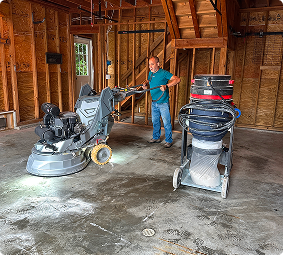
Before coating a wet room, we look for old sealers, existing coatings, cracks, surface contamination, weak concrete, and signs that moisture may be moving through the slab. Mechanical preparation then creates the surface profile needed for the selected resin system.
This matters in older Connecticut homes where a basement, laundry area, or pool structure may have gone through years of seasonal moisture.
Homeowners along the shoreline can review our Madison epoxy flooring services when planning a coating around local slab conditions and room use.
Quartz Color Does More Than Change Appearance
Quartz aggregate comes in blended colors rather than one uniform stone shade.
That variation can help hide water spots, lint, tracked grit, and minor everyday debris better than a perfectly flat solid color. Lighter blends can also work well in smaller laundry rooms or pool houses where natural light is limited.
Color still has practical consequences.
An extremely light pool-house floor may show hair and dark debris quickly. A very dark floor may show pale mineral residue from dried water. Mid-tone blends often provide more visual forgiveness.
Sika notes that decorative quartz systems offer an extensive color palette, making texture and appearance separate choices rather than forcing one finish style.
What Is A Quartz Broadcast Floor Exactly?
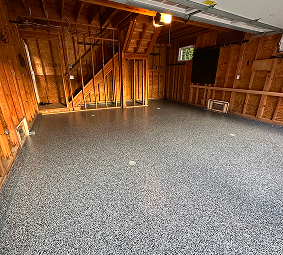
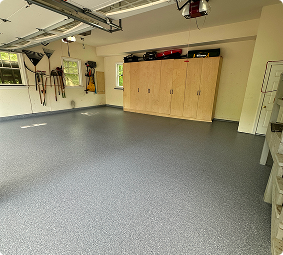
A quartz broadcast floor combines resin with colored mineral aggregate. We broadcast the quartz into a wet coating layer, remove loose excess material, and seal the surface with additional resin coats. The process creates a seamless, textured floor with more physical grip and visual depth than a plain smooth epoxy finish.
Where Does Quartz Beat Flake Or Solid Epoxy?
Quartz becomes especially useful where repeated water exposure makes traction a higher priority. Pool houses, laundry areas, mudrooms, changing spaces, and wash zones can benefit from its mineral texture. Flake may feel softer and clean more easily, while smooth epoxy often suits dry rooms where aggressive texture offers little benefit.
How Slip Resistant Is Quartz When Soaked?
Quartz can provide substantially more surface texture than smooth resin flooring, but no coating should be described as impossible to slip on. Aggregate size, broadcast density, grout coats, topcoat choice, contaminants, footwear, and water volume all affect traction. We select the texture around the specific wet-use pattern rather than relying on one universal rating.
Is Quartz Rough On Bare Feet?
Quartz can range from lightly textured to quite aggressive. Pool houses normally need a different finish than commercial wash areas because people often walk barefoot. Additional grout or sealer can soften the exposed texture while keeping useful grip. We prefer seeing how the room is used before deciding how much aggregate profile should remain.
Can Quartz Handle Chlorine And Pool Chemicals?
Properly specified quartz resin systems can resist the diluted chlorine exposure expected around normal pool use. Concentrated chemicals are a separate issue and should be cleaned quickly according to the coating manufacturer’s requirements. Correct topcoat selection matters because chemical resistance varies by resin chemistry, concentration, contact time, and the exact product spilled.
What Colors Do Quartz Systems Come In?
Quartz flooring is available in many blended colors, from lighter neutral mixtures to darker gray and earth-tone combinations. Blends can also help disguise wet footprints, lint, grit, and minor debris. For Connecticut pool houses and mudrooms, we consider lighting, adjoining finishes, cleaning habits, and how dried water marks may appear before selecting a sample.
See Quartz Samples For Your Connecticut Wet Area
A wet room should not receive the same floor automatically used in a garage or dry basement. Pool houses need barefoot-friendly traction. Laundry rooms need cleanup and spill resistance. Mudrooms need enough texture for wet shoes without becoming difficult to maintain.
EpoxyMize can compare quartz samples and texture levels against the actual concrete in your Madison, Guilford, Westport, or other Connecticut property. The consultation also gives us a chance to check slab condition, water paths, drains, thresholds, and the areas where wet traffic concentrates.
For a floor where water is part of normal use, the finish should be selected while wet performance is still part of the conversation—not after someone slips on a smooth surface.