Skip to content

The real test of decorative concrete finishes Connecticut homeowners and designers can trust is simple. Can the installer turn a written idea into a floor that matches it? A local architect put EpoxyMize through that exact test at her own home, with two custom floors and several rounds of samples before anything went down. That story explains how we approach custom work across our floor types for clients in Westport, Weston, and Wilton.
Architects see a lot of concrete finishers. When one hires a contractor for her own house, the bar is higher than any spec sheet.
Two Projects, One Demanding Client
Jenna Merola Trotzer is a local architect who has worked with several concrete finishers in the area. In her review, she describes hiring Jesneil for two projects at her own home. The first was a large three room outdoor epoxy floor that she wanted to look beachy and read like broken shells. The second was an outdoor lounge with a clean wet looking concrete floor in a salt and pepper polished finish.
Both looks are hard to describe and harder to hit. Beachy can mean ten different things. Broken shells could read as chips, flecks, or a mottled texture. A wet look has to stay crisp without turning glossy and slick.
Her review says they did multiple test samples on both projects, and that Jesneil went out of his way to get things spot on. She also mentions he handled some basic concrete repairs quickly. That is the whole method in one sentence.
Test Sample Iterations Before The Real Floor
A sample is a small version of the floor made with the same materials, colors, and finish steps planned for the job. It shows how chips settle, how color reads against real concrete, and how sheen looks in actual light.
The first sample rarely lands perfectly on a custom look. Maybe the flecks are too large, the base too dark, or the topcoat too shiny. Each round changes one or two variables until the client says yes. Skipping that step is how custom floors end up close but not quite right.
Light matters a lot in this stage. A sample that looks perfect in a truck bed can change on a covered porch at sunset, so we review samples where the floor will actually live.
The Broken Shell Aesthetic Outdoors
Outdoor decorative floors have extra jobs. They face sun, rain, temperature swings, and bare feet. A shell look has to keep its texture without becoming rough, and the color has to hold up under daylight instead of only looking good indoors.
That is why sampling outdoors matters even more. You see the finish in the same sun and shade the real floor will get.
What Salt And Pepper Polish Actually Means
Polished concrete has its own vocabulary. The Concrete Polishing Council aggregate exposure chart defines three classes. Class A is a cream finish made mostly of cement fines. Class B is the salt and pepper look, made mostly of fine aggregate. Class C exposes the larger coarse aggregate.
Salt and pepper sits in the middle. Grinding goes just deep enough to reveal the small sand particles in the mix, which creates a speckled, natural look without big stones. It suits clean modern spaces and reads calm rather than busy.
Sheen is a separate choice. The council also defines four sheen levels, which the American Society of Concrete Contractors explains as part of how designers specify polished floors. A wet look leans toward the brighter end without needing a heavy topcoat. Our polished concrete page covers where that finish fits in a home.
Decorative Concrete Finishes Connecticut Designers Specify
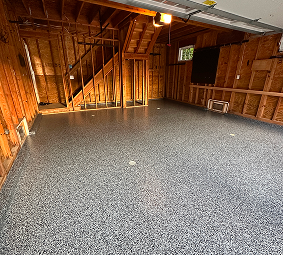
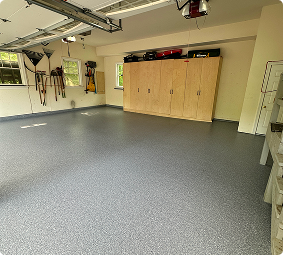
Designer requests in Connecticut homes tend to fall into a handful of looks. Natural polished concrete in a salt and pepper or cream finish. Fine quartz with a soft texture for mudrooms and pool houses. Solid color coatings with a satin sheen for clean modern rooms. Custom flake mixes for garages that need to match the house.
Each one has limits worth knowing early. Polished concrete depends on the slab, so old patches and glue can show. Quartz adds grip but changes how a floor feels barefoot. Solid colors look calm but show more dust than a busy blend. A sample answers those questions faster than any description.
Climate matters too. Outdoor floors here go through freezing winters and hot, humid summers, so exterior work needs systems and textures planned for both.
Architect Specified Flooring Done Right
When a designer hands us a specification, we read it the way they wrote it. Aggregate class, sheen level, color references, and texture goals all become checkpoints. Questions go back to the designer early instead of becoming surprises on install day.
Designer collaboration also means respecting their schedule and their client. We coordinate site visits, share sample photos, and keep the owner in the loop on every decision.
Already holding a spec or an inspiration photo? Send it through our contact form or ring 475-233-1311 to start the sample conversation.
Designer Collaboration On Site
Custom work goes smoother when everyone sees the same thing at the same time. We like to review samples with the homeowner and the designer together, on site, in the room where the floor will go. Notes from that meeting become the brief for the next round, so nothing gets lost between emails.
Timing matters on renovation projects too. Floors usually go in after drywall and paint but before trim and furniture, and the schedule should leave room for sampling.
Custom Color Epoxy Blends Beyond The Chart
Standard color charts are a starting point, not a limit. Custom blends can mix chip colors, change chip size, tint the base coat, or combine textures to land on a look that is not in any brochure.
The process stays the same. Describe the goal, sample it, adjust, and sample again. Clients often bring tile, stone, fabric, or paint swatches so we can match the floor to the room around it.
Past projects help too. Our past work gallery shows real floors in Fairfield County homes, which gives a sense of range before any samples are made. Pool houses and laundry rooms have their own custom option, covered in our look at quartz flooring for wet rooms.
Custom Floors In Westport, Weston, And Wilton
Homes around Westport often pair modern renovations with outdoor living spaces, which is exactly where custom finishes shine. Weston properties lean toward wooded, natural settings where stone and earth tones fit. Wilton clients often want interior floors that tie into large windows and open plans.
Each setting changes what custom means. The sample process makes sure the final floor fits the house, not just the idea.
Decorative Finish Questions
Can custom looks beyond standard colors be created?
Yes. Custom work can mix chip colors and sizes, tint the base coat, adjust sheen, or combine textures. The architect project at the center of this post started as a written description, broken shells and a wet salt and pepper polish, and became real floors through repeated sampling.
Do you make physical samples before installing?
For custom looks, yes. A sample uses the same materials and finish steps as the planned floor, so you see real color, texture, and sheen. The architect who hired Jesneil describes multiple test samples on both of her projects before the final floors went down.
Can you match an architect or designer specification?
Yes. We treat a spec as a checklist, covering aggregate class, sheen level, color references, and texture. Questions go back to the designer early, not on install day. Samples then confirm the spec reads correctly on the actual concrete before the full installation starts.
What is a salt and pepper polished finish?
It is polished concrete ground just deep enough to expose fine aggregate, the small sand particles in the mix. The Concrete Polishing Council calls it Class B. The result is a speckled, natural surface that sits between a cream finish and full coarse aggregate exposure.
Can outdoor floors get decorative treatments?
Yes. The architect project included a three room outdoor epoxy floor designed to read like broken shells and an outdoor lounge with a polished look. Outdoor work needs sampling in real sun and shade, plus texture that stays comfortable for bare feet.
How many sample rounds are included?
We do not publish a fixed number, because custom looks vary. The goal is a sample the client approves. Ask about the sample plan during your estimate so it can be spelled out in the itemized proposal and nothing about the process feels uncertain.
Bring Your Vision To The Sample Table
A custom floor is only as good as the testing behind it. The architect review shows what happens when an installer keeps sampling until the look is right.
Bring your vision or your architect, and we sample until it is right. Reach Jesneil at 475-233-1311 or book a design consultation for your Westport, Weston, or Wilton project.