Skip to content
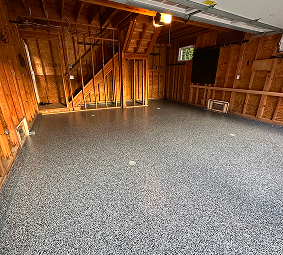
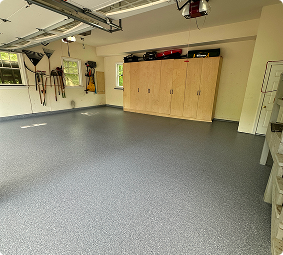
For Connecticut homeowners, DIY epoxy vs professional installation usually comes down to more than the price printed on a kit. A hardware-store epoxy can work on the right slab with careful preparation, but the savings shrink fast when grinding, repairs, extra material, tools, lost weekends, and a possible redo enter the math. Professional epoxy flooring costs more upfront because the quote includes work the box does not: slab evaluation, mechanical preparation, repairs, commercial equipment, and a coating system selected for Connecticut garages that see summer tire heat, winter road salt, melted snow, and seasonal moisture.
DIY Epoxy Vs Professional In Connecticut: The Math
A DIY kit wins the first comparison because the receipt is smaller. Looking only at the coating container, however, leaves most of the project out.
A homeowner in Cheshire, North Haven, or Branford may also need degreaser, crack-repair material, rollers, mixing tools, protective equipment, grinding or surface-preparation equipment, extra coating for lower-than-expected coverage, and a clear coat. The garage also needs to remain empty while prep, coating, curing, and cleanup take place.
The more important cost appears when a floor fails.
A failed coating normally cannot be fixed by rolling another coat across loose material. Rust-Oleum’s own repair guidance for delamination calls for removing unbonded coating, diamond grinding the surface, vacuuming it clean, and then recoating.
A homeowner who pays once for a kit and later pays to remove it has effectively purchased surface preparation twice.
Why The Box Price Is An Incomplete Number
Consider a simple example rather than a claimed Connecticut-wide price.
Suppose the coating itself looks inexpensive enough to make DIY attractive. Add the supplies needed to prepare an older two-car slab, repair damaged areas, obtain enough material for actual coverage, and protect the finish. Then add a weekend or more of labor.
If the floor performs well, DIY may still save money.
If tire lanes begin peeling twelve months later, the second project starts with an extra task the first project never had: removing the failed coating. At that point, a professional epoxy floor installation must deal with both the original concrete and the material bonded inconsistently across it.
Redo economics are why the cheapest first installation is not always the lowest-cost floor.
Big-Box Epoxy Kits Are Not Automatically Bad
A fair comparison has to acknowledge this: some homeowners get good results from DIY epoxy.
The slab may be clean and sound. The owner may spend far more time on preparation than the box suggests. Temperature, moisture, coverage, mixing, and cure time may all cooperate.
Current retail feedback also shows a mixed picture rather than universal failure. A Rust-Oleum EpoxyShield water-based garage kit listed at Lowe’s currently carries about 3.7 out of 5 stars from roughly 1,190 reviews. Its review summary reports successful finishes alongside recurring complaints involving coverage, uneven color, peeling, chipping, and tire marks.
The honest takeaway is not that every DIY kit fails. It is that the margin for error can be smaller than the low purchase price suggests.
The Solids Content Changes What Stays On The Floor
“Epoxy” does not describe one identical material.
Rust-Oleum’s technical data for one EpoxyShield water-based garage floor coating lists 52.6% to 52.8% solids by volume and a recommended dry film thickness of 3.0 to 3.5 mils per coat. The remainder includes material that leaves the film during curing.
A 100-percent-solids epoxy formulation behaves differently because essentially all mixed coating material remains in the cured film. It can support a much higher-build installation when the specific product and system call for it.
Solids content alone does not guarantee a good floor. Product chemistry, coat thickness, concrete profile, moisture, mixing, repairs, topcoat selection, and installer control all affect performance. It does explain why comparing a thin retail kit with a professionally built coating system only by price per gallon gives a distorted picture.
Surface Prep Is Where The Two Jobs Separate
Most homeowners can buy epoxy. Reproducing professional surface preparation is harder.
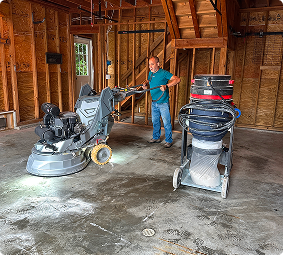
Concrete needs a profile that allows the resinous coating to develop a strong mechanical bond. The American Concrete Institute notes that abrasive blasting and diamond grinding are important methods for producing the required concrete surface profile for resinous coatings.
Professional epoxy floor coating installers can mechanically grind the slab while controlling dust, opening weak surface material, exposing contamination that washing did not remove, addressing cracks, and preparing edges and transitions.
This preparation is especially important on older Connecticut garage slabs. Years of oil drips, tire residue, previous sealers, salt exposure, and absorbed contaminants can create a floor that looks clean but is not ready for coating.
For garages where prep and coating selection need to work as one system, our garage floor coatings service starts with the concrete rather than the finish color.
Acid Etching And Grinding Are Not The Same Job
Many retail kits include or recommend an acid-etching step. Chemical etching can alter a suitable concrete surface, but it does not solve every substrate problem.
Grinding physically removes material. It can strip weak laitance, expose sounder concrete, remove some existing coatings, and create a controlled profile across the floor.
A garage with a previous sealer, stubborn contamination, failing paint, or inconsistent surface hardness needs more investigation than a clean new slab. Applying a high-quality epoxy over an unsuitable surface still creates a weak flooring system.
The coating can only bond as well as the concrete beneath it allows.
Connecticut Weather Raises The Cost Of Weak Adhesion
A Connecticut garage changes environment repeatedly throughout the year.
In July, parked vehicles bring warm tires onto the same four contact zones. In January and February, vehicles carry snowmelt, sand, brine, and deicing salts inside. Connecticut DEEP specifically discusses rock salt and brine as common anti-icing and deicing materials used during winter weather.
Moisture then sits near door openings and tire paths while the slab moves through colder conditions.
Those stresses do not automatically destroy epoxy flooring. They expose weaknesses already present in preparation, film build, curing, or system choice.
Our guide to hot tire pickup on garage floor coatings explains why peeling often begins under vehicle tires even while the rest of a garage still looks acceptable.
Thin Films Leave Less Room For Error
Film thickness matters because the coating is the working layer between vehicle traffic and the concrete.
A thin system can look glossy immediately after installation. Appearance on day two does not reveal bond strength below the surface or the amount of cured material left in a tire path.
Professional epoxy flooring services can use systems with multiple functional layers when the slab and use call for them. The base coat, broadcast media, and topcoat each serve a different purpose instead of asking one thin coat to provide adhesion, appearance, texture, wear resistance, and stain resistance at once.
Homeowners comparing systems should ask what actually remains on the floor after cure, not only how many containers arrive.
For a closer look at the material itself, our epoxy flooring page covers where epoxy fits within a professionally prepared flooring system.
DIY Failure Often Starts Before The Roller Moves
Peeling is commonly blamed on the coating because the failed material is what becomes visible.
The cause may have appeared hours earlier.
Residual oil can block adhesion. Moisture can interfere with the bond. Improper component ratios can affect cure. Waiting too long after mixing can reduce workable time. Applying material outside the allowed temperature range can change how it flows and cures.
Even the manufacturer identifies contamination, improper mixing, and missed recoat windows as causes of delamination between coats.
Professional epoxy floor installers reduce those variables by treating preparation, material handling, timing, and application as one process rather than separate weekend tasks.
The Redo Can Cost More Than The Original Mistake
A failed DIY floor adds labor to every future option.
Loose coating has to come off. Strongly bonded patches may remain while weak areas disappear, leaving an uneven surface. Edges need attention. Tire lanes may require heavier grinding. Cracks hidden beneath the first coating can reappear once removal begins.
Only then does the new installation start.
For homeowners already planning to hire an epoxy flooring company after a failed kit, the useful question is not, “How much did the original kit cost?”
It is, “How much additional preparation did the failed kit add to the professional job?”
That number determines the real cost of doing the floor twice.
Can A Professional Crew Save Every Failed Floor?
In many cases, yes, but the old coating needs to be evaluated first.
A professional crew can determine which material remains bonded, where delamination has started, how aggressively the slab must be ground, and whether contamination or moisture contributed to the failure. The answer may involve full coating removal rather than covering the existing finish.
Coating directly over loose DIY material only transfers the weakness into the new system.
Connecticut homeowners near Cheshire can also review our Cheshire epoxy flooring service area for local garage and concrete coating options.
When DIY Epoxy Can Still Make Financial Sense
DIY becomes more reasonable when the concrete is sound, uncontaminated, uncoated, dry, and easy to prepare. The homeowner also needs enough time to follow every preparation and cure requirement rather than treating prep as the short part of the project.
The risk rises with older garages, previous paint, oil contamination, moisture history, pitting, repairs, or high expectations for long-term appearance.
A lightly used workshop and a two-car Connecticut garage carrying wet vehicles through winter do not place the same demand on a coating.
The floor, use pattern, and acceptable risk should decide the installation method.
When Professional Epoxy Is The Better Value
Professional installation becomes easier to justify when failure would be expensive to correct.
Garages with previous coatings, heavy vehicle use, visible repairs, questionable moisture, or years of contamination deserve a slab assessment before material is ordered. The same applies when the homeowner wants a finished garage and does not want to repeat the project in a few seasons.
The professional quote buys more than epoxy. It buys control over the parts of the installation most likely to determine whether the coating stays bonded.
For many Connecticut garages, that is where the value sits.
Are Hardware Store Epoxy Kits Any Good?
Some hardware-store epoxy kits can perform well on clean, sound concrete when the owner follows the preparation, mixing, coverage, temperature, and cure instructions closely. The limitation is not simply the brand. Retail systems can be thinner, and homeowners often have less equipment for correcting contamination, old coatings, damaged concrete, and inconsistent surface profile.
Why Do DIY Floors Peel Within A Year?
Early peeling usually points to an adhesion problem rather than ordinary wear. Oil residue, moisture, smooth concrete, weak surface material, incorrect mixing, insufficient preparation, or hot-tire stress can expose the weak bond. Connecticut garages add winter salt and snowmelt to those conditions, especially in the same parking lanes used every day.
How Much Does Fixing A Failed DIY Job Cost?
There is no honest flat price because removal difficulty varies widely. A lightly bonded coating may grind away faster than a floor with scattered areas of strong adhesion. Repair costs can include coating removal, diamond grinding, crack work, disposal, new materials, and the replacement installation. An on-site slab inspection gives the useful number.
What Equipment Do Professionals Use That I Cannot Rent?
Many tools can technically be rented, including concrete grinders and industrial vacuums. The difference is using the correct tooling, passes, dust collection, edge preparation, and repair methods for the slab. Professional crews also work with mixing equipment and installation tools selected for the coating system, instead of relying only on equipment included inside a retail kit.
Is Professional Coating Worth Triple The Kit Price?
Comparing only the coating kit with a complete installation creates an uneven comparison. A professional price may include mechanical preparation, repairs, labor, commercial equipment, multiple coating layers, cleanup, and warranty terms. The better comparison is total installed cost versus the cost, labor, risk, and possible removal expense of completing the DIY project twice.
Can You Coat Over My Failed DIY Attempt?
Sometimes part of an existing coating can remain, but loose or poorly bonded material cannot serve as a reliable base. We inspect the floor first, identify the failure pattern, and determine the removal needed. Rust-Oleum itself recommends removing loose material and diamond grinding failed areas before recoating, which shows why simply hiding peeling epoxy rarely solves it.
Get The Once-And-Done Number Before Buying A Kit
DIY deserves a fair comparison because the lower upfront cost is attractive, and some carefully prepared floors perform well. The decision changes when a Connecticut garage has old concrete, contamination, previous coatings, winter salt exposure, repairs, or no room in the budget for a second installation.
EpoxyMize can inspect the slab and explain what preparation and coating system the floor actually needs before money goes into materials. Compare the complete professional number against the complete DIY number, including prep, tools, time, additional material, and failure risk.
A free epoxy flooring quote gives homeowners in Cheshire, North Haven, Branford, and surrounding Connecticut communities a real figure to compare before the first kit gets opened.