Skip to content

The right veterinary clinic flooring cleans fast, steadies nervous pets and takes claws, carts and foot traffic. A coated concrete floor gives prepared slab a stronger, more closed surface that supports cleanup between patients. Texture and finish can change by room, from calm solid colors in exam rooms to grippy quartz near wet areas. EpoxyMize installs veterinary clinic floor coatings in Fairfield, Westport and Danbury.

A vet clinic floor has a long list of jobs. Big ones. It sees muddy paws in the lobby, wet coats in grooming, fluids in exam rooms and rolling carts in the back. Staff clean it all day. Scared pets slip and scramble. The floor has to help with all of that without slowing anyone down.
Why Cleaning Speed Matters
In a clinic, staff clean the floor between patients and again at night.
Our vet clinic page explains that epoxy floor coating systems help create floors that are easier to clean and stronger under daily traffic. Epoxy gives prepared concrete a stronger, more closed surface that supports cleanup.
That closed surface keeps fluids and dirt on top instead of in the pores. A quick mop clears it.
Follow the label on every cleaning product you use. Your staff and your protocols decide the cleaning routine. The floor just makes that routine faster.
Veterinary Clinic Flooring By Room
Each room in a clinic asks something different of the floor.
Lobbies and waiting rooms take wet paws and tracked grit. Our vet page notes that textured epoxy or quartz coatings can help near waiting room entries.
Exam rooms need a calm look and fast cleanup. Our vet page says solid color systems can create a calm, neat look.
Treatment halls take carts, claws and constant foot traffic. Flake systems can help hide light marks from claws and foot traffic.
Staff wash kennel rooms again and again. Our vet page notes that a proper epoxy system can support frequent cleaning in kennel rooms.
Grooming areas get wet all day. Our vet page says grooming areas can use coatings planned for water exposure and easy cleanup.
Footing For Nervous Patients
A scared dog on a slick floor can panic. Good footing helps everyone stay calm.
Our vet page notes that the right texture can give pets better footing without making the floor rough.
Texture is a balance. Too much texture can trap hair and residue. Too little can feel unsafe when water hits the floor, and a dog that slides once on an exam room floor may fight every visit after that.
Quartz systems add texture where traction matters most. See our quartz flooring page for that option. Smoother finishes can work in dry office and storage areas.
Hiding Daily Wear
Claws, carts and chairs mark a floor over time. A clinic floor should still look clean on a busy Friday afternoon.
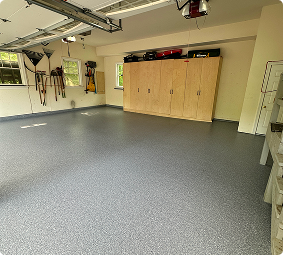
Flake systems help here. The multi tone chips hide light marks from claws and foot traffic between cleanings.
Mid tone blends also hide hair, dust and small debris. That keeps the floor looking tidy for clients without constant spot cleaning.
Good prep and a skilled crew matter here. Our FAQ says epoxy and polyaspartic coatings can reach 10 to 20 years of use.
Prep Before The First Coat
A clinic floor is only as good as the slab under it.
Our vet page lists what shelters and clinics should check first. Urine damage, cracks, soft concrete, drainage, old paint and odor prone areas.
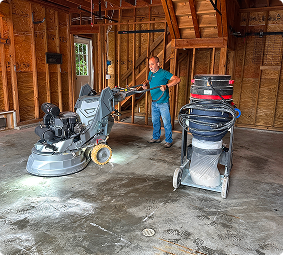
At the on site estimate, Jesneil Villa, the owner, checks the concrete, notes prep needs and recommends the best system. Grinding then profiles the slab so the coating can bond.
Grinding makes dust. OSHA flags respirable crystalline silica as a grinding hazard. Dust control matters even more next to exam rooms.
Phased Installs Around Patients
Most clinics cannot close for a week. Phasing keeps the doors open.
One way to phase starts with back rooms, like storage and treatment areas, while the front of house keeps running. Exam rooms follow, one or two at a time. The lobby can come last, timed for a weekend or a slow day.
Our vet page notes that some projects work best by room. Others fit planned closures or lower traffic days. We talk through which rooms need clearing before installation.
We set prep windows, cure times and the order of rooms before work begins. Clinic projects can run longer than a home garage. Start early.
Plan for fresh air in each phase. The EPA suggests extra ventilation whenever people use VOC products indoors. Keep patients and staff away from active rooms.
Choosing Colors For A Calm Clinic
Color sets the mood the moment a client walks in.
Soft neutral solids feel calm and clean in exam rooms. They also make the room look orderly in photos and online reviews.
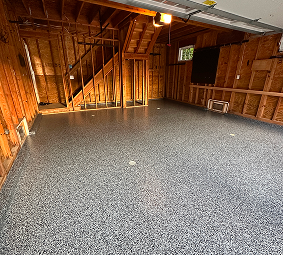
Busy halls and treatment areas benefit from a flake blend. The speckled pattern hides scuffs, hair and cart marks between cleanings.
Lobbies can mix both. A durable flake near the door, with a solid field in the seating area, gives the space a finished look without showing every muddy paw.
Think about lighting too. Bright clinic lights bounce off lighter floors and make rooms feel larger. Big win. Small rooms can also feel tight and closed in when the floor is too dark, especially exam rooms with no windows at all.
Cleaning Routines Your Team Can Keep
A floor only stays clean if the routine is easy. Keep it simple. Make it habit.
Keep mops and squeegees near the rooms that need them most. Remove solids first, then clean with a product approved for your protocols and follow the label.
Dry wet spots quickly. A sealed floor makes that a fast job.
Walk the floor weekly. Look for chips at door thresholds, under chair legs and cart paths so you catch small issues early.
Carts, Chairs And Heavy Equipment
Clinics roll a lot across the floor. Treatment carts, scales, chairs and supply racks all move daily.
Caster wheels concentrate weight on small points. Over time, they can wear a path into a weak surface. A properly prepped, well bonded coating handles that traffic far better than bare or painted concrete.
Put felt or rubber pads under chair legs in the lobby. Check cart wheels now and then for grit stuck in the treads, since a trapped stone can scratch any floor.
Heavy equipment like tables and kennels on stands may need pads under the feet as well. Ask about these details at the estimate so the plan covers them.
Related Medical Spaces
Some clinics share buildings with labs or larger animal hospitals. Those spaces have their own needs.
See our pages on hospital floor coatings and laboratory floor coatings for those projects.
Serving Fairfield, Westport And Danbury
Jesneil Villa started EpoxyMize in Fairfield and remains its only owner. Clinic work covers Fairfield County and Southwestern CT, including Westport and Danbury.
At the final walkthrough, Jesneil inspects the floor with you, confirms edges and quality and hands over warranty papers. Call 475-233-1311 to plan a walkthrough.
Vet Clinic Floor Questions
What is the best flooring for a veterinary clinic?
A coated concrete floor gives prepared slab a stronger, more closed surface that supports cleanup. Finishes can change by room, with solid colors in exam rooms, flake in busy halls and textured epoxy or quartz near entries and grooming areas.
Is an epoxy floor safe for pets to walk on?
The right texture can give pets better footing without making the floor rough. Too much texture traps hair and residue, while too little can feel unsafe when wet. Quartz adds grip where traction matters, and smoother finishes suit dry rooms.
Will claws scratch a coated clinic floor?
Claws, carts and chairs mark any floor over time. Flake systems help hide light marks from claws and foot traffic between cleanings. Our FAQ notes that epoxy and polyaspartic coatings can last 10 to 20 years with proper prep and install.
Can a vet clinic stay open during a floor project?
Some projects work best room by room, while others fit planned closures or lower traffic days. Prep windows, cure timelines and room sequences all get planned before work begins, so the clinic can keep seeing patients during most of the project.
What floor works best in a grooming room?
Grooming areas get soaked every day, so they need coatings planned for water exposure and easy cleanup. Add enough texture for wet footing without trapping hair. Textured epoxy or quartz can fit, depending on how the room gets used and cleaned.
What should be checked before coating a clinic floor?
Check for urine damage, cracks, soft concrete, drainage, old paint and odor prone areas. At the on site estimate, the owner reviews the concrete, notes prep needs and recommends a system. Grinding then profiles the slab so the coating bonds.
Request A Clinic Walkthrough
A clinic floor should make every cleaning faster and every patient steadier. Match the finish to each room, and the floor works with your team.
See our veterinary clinic floor coatings, then request a walkthrough. The right veterinary clinic flooring supports your whole practice.