Skip to content

A good kennel floor coating seals the concrete in your runs, so rinse water and accidents stay on top instead of soaking in. That means faster washdowns, less odor held in the slab and better footing for dogs and staff. The right plan also looks at drains, slope and old damage before any coating goes down. We install kennel floor coatings in Danbury, Newtown, Monroe and nearby towns.

Kennel floors work hard. Very hard. Staff hose them down every day. They take claws, paws, food, water and accidents. Staff walk them with buckets and squeegees. Bare concrete struggles under that load, and so do thin coatings that were never built for it.
Why Bare Concrete Struggles In Kennels
Concrete is porous. It soaks up liquids like a hard sponge.
Our doggy daycare page puts it plainly. Bare slabs hang on to pet smells deep inside. Each accident and each rinse pushes a little more into the pores.
Over time, that shows up as stains, rough patches and a smell that never quite leaves, even after a full washdown. Sticky August weather can make it worse.
A sealed surface changes the picture. Our kennel page says a coating over prepped concrete gives a more closed surface. That surface resists moisture.
Kennel Floor Coating Starts With Drains
Water has to go somewhere. That is why drains come first.
Our kennel page says drain location, slope, edge condition and water flow should be checked first, before choosing a coating.
A run that pools water in the middle will keep pooling after the coating goes on. A coating follows the slab under it. It does not fix a bad slope.
So the walkthrough starts with a hose and a close look. No guessing at all. Where does the water go? Where does it sit? Are the drain edges sound? Those answers shape the prep and the system.
Old Urine Damage And Odor
Older kennels can have years of history in the slab. Think of every accident since the building opened.
A coating cuts down on new absorption. But years of old urine in the slab need a look before any system gets picked.
Our kennel page adds that a sealed surface limits new absorption, but the concrete has to be properly prepared first. Some concrete may need repair or deeper prep before the coating goes down.
That honesty matters. A coating is not a deodorizer. Prep removes the weak, contaminated surface so the new system bonds to sound concrete.
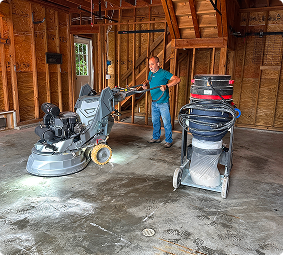
Our post on why surface preparation matters covers the prep process.
Wet Traction In Aisles And Wash Zones
Wet floors are a daily fact in a kennel. Footing matters for dogs and for people.
For aisles and wash zones, our kennel page points to quartz. It helps footing during wet cleanup. It also does not trap hair.
Texture is a balance. Our vet clinic page notes that too much texture can trap hair and residue, while too little can feel unsafe when water hits the floor.
The goal is enough grip for a wet aisle, with a surface that still squeegees clean in a few passes. See our quartz flooring page for that system.
Claws And Daily Wear
Dogs pace, dig and spin. Claws hit the floor all day.
A bare slab shows that wear as scratches and dust. A coated floor takes the traffic on its wear layer instead.
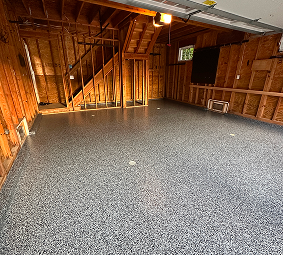
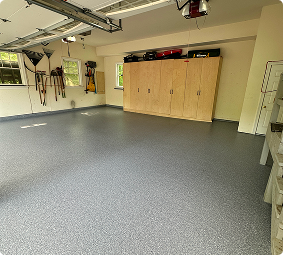
Our vet clinic page notes that flake systems can help hide light marks from claws and foot traffic. Mid tone blends also hide hair and small debris between cleanings.
Good prep matters for life span. Our FAQ puts epoxy and polyaspartic floors at 10 to 20 years of use.
Washdowns And Daily Cleaning
Staff rinse a kennel every day. The floor has to keep up.
Our kennel page notes the coating can take rinse downs, spot cleaning and daily use. A closed surface lets water and waste move toward the drain instead of sinking in.
Keep cleaning simple. Remove solids first, rinse, then squeegee toward the drain. Follow the label on any cleaning product you use, and rinse away residue so it does not dull the surface or leave a film that dogs can slip on later in the day.
Let the floor dry between uses when you can. Good airflow helps. The EPA advises keeping indoor humidity below 60 percent, ideally between 30 and 50 percent, and drying wet areas within 24 to 48 hours.
Walls, Edges And Run Dividers
The floor is not the only surface that gets wet. The bottom of each wall and divider takes splash and spray every day.
Ask about how the coating meets the walls and the base of each run panel. Gaps at those edges can let water and waste sit where a squeegee cannot reach.
Check where bolts hold gates, posts and dividers to the slab. Those spots may need extra prep, since anchors and old holes can trap grime.
Think about the order of work too. Panels may need to come out, or the crew may need to work around them. Plan that at the walkthrough so install day goes smoothly.
Staff Safety During Daily Cleaning
Your team spends hours on these floors with hoses and buckets. Their footing matters as much as the dogs.
Good texture in wash zones helps staff move with confidence. So does good drainage, since a floor that sheds water quickly is a floor that dries quickly.
Rubber boots with a solid tread help on any wet floor. Keep hoses coiled and out of walkways. Squeegee standing water toward the drain after each rinse, not at the end of the shift.
These habits, paired with the right surface, cut down on slips and speed up every clean.
Picking Colors For A Kennel
Color affects how clean a kennel looks between washdowns. Light floors show every muddy print. Dark floors show hair and dust. A mid tone flake blend sits in the middle and hides daily wear on the coating.
A brighter floor also bounces light around dim runs, so staff can spot accidents and debris faster.
Phased Installs For Working Kennels
Boarding never really stops. Dogs still need a place to stay.
Our kennel page notes that many kennel projects can be phased by room, run bank or aisle. We confirm the kennel schedule with you before installation begins.
That lets you move dogs to one side while the crew works on the other. We map prep timelines, cure windows and room order before work starts.
Plan for fresh air during each phase. The EPA page on indoor VOCs recommends more fresh air while such products are in use. Keep animals well away from active work zones.
Serving Danbury, Newtown And Monroe
Jesneil Villa, our founder and sole owner, runs the company out of Fairfield. He checks the kennel slab at the estimate, notes prep needs and recommends a system.
At the end, Jesneil inspects the floor with you and hands over warranty papers. Learn more on our Danbury service area page, or call 475-233-1311.
Kennel Floor Questions
What is the best floor coating for a dog kennel?
A coating that creates a closed surface over prepared concrete works well for kennels, since rinse water and accidents stay on top. Quartz is a strong choice for boarding aisles and wash zones, because it improves footing during wet cleanup without trapping hair.
Will a kennel floor coating stop urine odor?
A sealed surface limits new absorption, so fresh accidents stay on top. Old urine damage in the slab should be reviewed first, though. A coating is not a deodorizer, so the concrete has to be properly prepared before the new system goes down.
Do kennel drains need work before coating?
Drain location, slope, edge condition and water flow should be checked first. A coating follows the slab under it, so a run that pools water will keep pooling after it is coated. The plan covers any slope or drain problems first.
Can a kennel stay open during a floor coating project?
Many kennel projects can be phased by room, run bank or aisle. Kennel scheduling gets confirmed before installation begins, so dogs can move to one side while the other side gets coated. We map prep and cure windows ahead of time.
Is a coated kennel floor slippery when wet?
Texture is the answer. Quartz improves footing during wet cleanup. Too much texture can trap hair, while too little can feel unsafe when water hits the floor. The right balance gives dogs and staff grip and still squeegees clean in a few passes.
How long does a kennel floor coating last?
Our FAQ notes that epoxy and polyaspartic coatings can last 10 to 20 years under normal residential or commercial use, with proper prep and professional install. Daily care, like rinsing and squeegeeing toward the drain, helps the floor wear well.
Book A Kennel Walkthrough
A kennel floor should make cleaning faster, not harder. Start with drains and prep, then pick the texture that fits your runs.
See our kennel floor coatings page, then request a walkthrough. The right kennel floor coating makes every washdown easier.