Skip to content
A driveway coating in Connecticut can improve curb appeal while giving sound concrete a more finished surface against vehicle traffic, oil drips, road residue, rain, sunlight, and winter exposure. The important part is choosing an exterior-rated system rather than treating the driveway like an indoor epoxy floor.
For homes in Westport, Fairfield, and Southport, the street-facing slab gets judged before almost anything else on the property. It also takes some of the hardest abuse. Tires stop at the apron, snowplows leave packed snow near the road, salt follows vehicles, and coastal Fairfield County adds moisture and weather exposure.
The Driveway Sets The First Visual Standard
A stained or patched driveway can make an otherwise updated property feel unfinished.
Dark tire paths, old oil marks, faded sealer, rust stains, leaf tannins, repaired cracks, and worn concrete all sit in a large open area with little to hide them. Pressure washing can improve surface dirt, but it cannot make every old repair or damaged section visually consistent.
A decorative coating can change that.
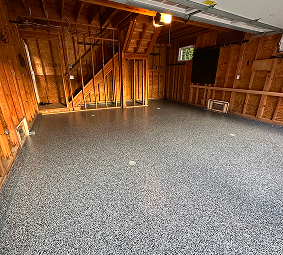
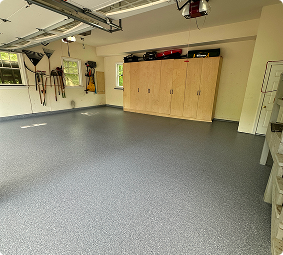
Our driveway coatings can use flake, quartz, or other outdoor-suitable finishes to create a more uniform surface while adding texture and protection over properly prepared concrete.
The coating choice starts with what the driveway has to survive, not only the color the homeowner prefers.
Curb Appeal Needs To Survive Vehicle Traffic
A driveway finish is not useful if it looks good only when empty.
Cars repeatedly load the same wheel paths. Tires arrive hot in summer. Oil, coolant residue, dirty water, brake dust, and road grime accumulate around parked vehicles.
The apron receives even more concentrated exposure because vehicles slow, turn, and transition between road and driveway there.
High-performance resin systems are available with strong mechanical resistance, resistance to tire marking, and chemical resistance. Current polyaspartic technical literature also shows why UV stability and hot-tire performance need to be evaluated as specific properties rather than assumed from the word “coating.”
A good driveway system needs both appearance and automotive tolerance.
The Apron Is The Hardest Part Of The Driveway
The street end deserves its own inspection.
This is where hot tires first contact the driveway after road travel. It is also where snowplow piles, winter brine, road grit, runoff, and vehicle turning forces concentrate.
CTDOT uses a 23% sodium-chloride brine solution as part of winter anti-icing operations. That material can travel onto residential driveways through vehicle tires, meltwater, and snow pushed toward the driveway opening.
Southport and Fairfield properties can add coastal salt exposure to that winter road treatment.
A coating at the apron therefore needs sound adhesion, suitable chemical resistance, and an exterior finish that can tolerate repeated vehicle contact.
Connecticut Salt Exposure Is Not Just A Stain Problem
Road salt can leave a pale residue that makes concrete look dirty, but appearance is only one concern.
Salt-containing moisture enters porous concrete and can contribute to winter deterioration as the slab repeatedly gets wet, freezes, thaws, and dries. The most exposed zones often sit closest to the road.
A coating can reduce direct surface absorption when the system is appropriate for the slab.
It should not be sold as a cure for concrete that is already scaling, structurally damaged, or retaining water because of poor drainage. Weak material needs to be removed or repaired before a finished system goes down.
This is why concrete driveway coating in CT begins with the substrate rather than a decorative sample.
Driveway Sealer And Coating Are Different
A sealer usually creates a thinner protective treatment over concrete.
Depending on its chemistry, it may reduce water absorption, deepen the appearance of decorative concrete, or add some stain protection. It generally does not create the same build, texture, or visual transformation as a broadcast coating system.
A coating creates a more substantial finished layer over prepared concrete.
Sherwin-Williams, for example, markets exterior decorative concrete sealers specifically for driveways, patios, walkways, and pool decks with resistance to salt, water penetration, UV, abrasion, and hot tire marks. That illustrates an important point: even within the “sealer” category, exterior performance varies by product specification.
The right choice depends on how much change the driveway needs.
Old Sealer Can Complicate Resurfacing
Existing sealer is not always harmless.
Some driveways have multiple applications from previous years. The remaining finish may be cloudy in protected areas, completely gone in tire lanes, and partially bonded elsewhere.
Applying another system on top can preserve the weakest layer underneath.
EpoxyMize’s current driveway process specifically evaluates deteriorated sealer because new material only performs as well as what supports it.
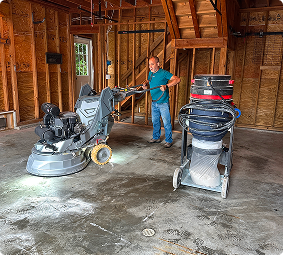
Mechanical preparation may need to remove the old finish before driveway resurfacing in Fairfield can begin.
This work rarely shows in the finished photograph, but it has a major effect on adhesion.
Decorative Broadcast Hides More Than Plain Concrete
Exterior coatings do not need to produce one flat solid color.
A decorative broadcast system uses aggregate or flakes to create visual movement across the driveway. This can make repaired areas, normal dust, small debris, and light staining less visually obvious than a perfectly uniform solid finish.
The texture also serves a practical role.
Driveways need enough traction for rain and normal winter conditions. Too little texture can leave the surface unnecessarily slick. Too much can trap grit and make rinsing more difficult.
The best finish sits between those extremes.
A driveway should look upgraded while still functioning like the main vehicle surface of the property.
Westport Homes Need UV Stability
Open driveways can receive hours of direct summer sun.
Ultraviolet exposure matters because some resin chemistries can discolor, chalk, or lose gloss when used outside without a suitable UV-stable finish. South- and west-facing driveways often receive particularly strong exposure.
Exterior coating selection therefore has to include sunlight.
Polyaspartic systems are commonly used where UV resistance and fast curing are required. Sika’s current polyaspartic technical data lists excellent UV resistance along with abrasion, chemical, and tire-mark resistance.
Those are useful traits for a driveway, but the specific system still needs to be rated for the intended exterior application.
Fairfield Driveways See Four Different Seasons
Fairfield concrete rarely faces one consistent environment.
Spring brings rain and dirty runoff. Summer creates hot pavement and tire heat. Fall brings wet leaves that can release tannins. Winter introduces snow, ice, salt, plowing, and repeated freeze-thaw cycles.
A curb appeal driveway finish has to stay attractive through all of them.
That means the system cannot be chosen only for hardness.
Water behavior, UV resistance, traction, surface movement, chemical exposure, and concrete condition all matter. A coating that performs well indoors does not automatically meet those outdoor needs.
Epoxy may be one component in certain builds, while other projects may rely more heavily on exterior polyaspartic, polyurea, quartz, or another rated system.
Southport Adds Coastal Exposure
Southport creates an additional variable because properties sit close to Long Island Sound.
EpoxyMize’s Southport service guidance specifically accounts for coastal salt air, humidity, UV exposure, winter salt, and freeze-thaw conditions on outdoor surfaces.
That environment increases the value of proper product selection.
Homeowners planning driveway work in the area can review our Southport concrete coating services for the broader local approach.
The finish still needs to reflect the individual driveway.
A shaded coastal driveway that stays damp has different demands from an open slab that receives full afternoon sun.
Snowplows Need An Honest Answer
No coating should be called plow-proof.
A correctly installed exterior system can tolerate normal driveway service, but a steel blade scraping directly against the surface can damage coatings, bare concrete, asphalt, pavers, and other finishes.
Blade height and snow-removal technique matter.
Raised plow shoes, rubber cutting edges, and avoiding aggressive scraping against exposed coating can reduce risk. Plastic snow shovels are also gentler than sharp metal edges.
CTDOT itself notes that snowplows push large volumes of snow toward driveway entrances during winter storms.
That apron zone should therefore be planned for real Connecticut snow removal rather than ideal summer conditions.
Shovels Can Damage A Finish Too
Homeowners often focus on truck-mounted plows and overlook hand tools.
A metal shovel with a worn or bent edge can scrape aggressively across the same routes all winter. Chopping compacted ice with a metal tool places even more concentrated force on the surface.
A quality coating can resist substantial abrasion, but abrasion resistance does not mean immunity from deliberate scraping.
Plastic-edged tools are easier on decorative surfaces.
Deicing products should also be selected and used according to the coating manufacturer’s guidance. A chemically resistant finish provides more protection, but leaving concentrated salt residue on the surface for long periods still makes little sense.
Regular winter rinsing once conditions allow helps remove residue.
Hot Tires Test The Same Area Every Day
Summer creates the opposite temperature problem.
Vehicles travel across hot asphalt and then park in nearly identical spots. Tire heat, pressure, and rubber chemistry concentrate on relatively small sections of the finished driveway.
Hot tire marking is not the same as coating delamination.
Marks affect the surface appearance. Delamination means the system has lost adhesion beneath the tire.
EpoxyMize’s guide to hot tire pickup on floor coatings explains why concrete preparation, contamination removal, cure time, and resin choice all influence what happens beneath a parked tire.
The same adhesion logic matters at an exterior driveway apron.
Oil Resistance Depends On The Whole System
A parked vehicle eventually leaves something behind.
Small oil drips, automotive fluids, tire dressing, road film, and dirty meltwater can reach the surface. A dense coating makes these contaminants easier to clean before they reach porous concrete.
Chemical resistance still has limits.
Different resins tolerate different substances for different lengths of time. Spills should be cleaned rather than treated as permanent exposure tests.
A driveway with a history of oil contamination also needs extra attention before installation.
Grinding can remove surface material, but oil that has penetrated deeply may require additional treatment. Coating contaminated concrete without addressing it creates an adhesion risk exactly where vehicles will park.
Drainage Matters As Much As Chemistry
Water reveals driveway problems.
It settles into low areas, runs along crack lines, collects beside curbs, and freezes where drainage is poor. A coating cannot change the laws of gravity.
Minor surface correction may be possible during some resurfacing projects.
Larger pitch or drainage problems can require concrete repair before decorative work begins. Exterior resurfacing materials are specifically produced for sloping, vehicle traffic, deicing-salt exposure, and freeze-thaw conditions, which shows why correcting the substrate is a separate part of exterior work.
The prettier finish should come after the water path makes sense.
Cracks Need More Than Cosmetic Filling
Not every crack means the driveway is finished.
Stable surface cracks can often be repaired as part of preparation. Active movement, settlement, frost heave, or vertical displacement needs more caution.
The distinction matters because a coating cannot hold two moving pieces of concrete together indefinitely.
Joints also need to continue doing their intended job.
Filling every visible line rigidly just to make the driveway look seamless can create problems when seasonal movement returns.
We evaluate how the crack behaves before deciding how it should be treated.
Patios Need A Different Traffic Strategy
A driveway and patio may sit beside each other, but they should not automatically receive identical finishes.
Driveways prioritize tire traffic, oil resistance, winter maintenance, UV exposure, and vehicle traction. Patios place more emphasis on foot comfort, furniture, cleaning, and wet pedestrian traffic.
Our patio coatings are planned around those different demands.
Coordinating colors can still create a unified exterior design.
The texture and system build should follow how each slab is actually used rather than forcing one coating specification across the property.
Cure Time Matters Before The First Car Returns
A newly coated driveway can look ready before it reaches the required vehicle-return time.
Resin systems develop properties as they cure. Temperature and product chemistry both influence that schedule.
Foot traffic may be allowed before vehicle traffic.
Parking too early adds vehicle weight, hot tires, turning stress, and concentrated pressure while the material is still developing its final performance.
The installer should give a clear return-to-service time for the exact system used.
Waiting another day is far less expensive than marking or damaging a driveway before the coating has fully entered service.
Can Concrete Driveways Really Be Coated In CT?
Yes, sound concrete driveways can receive properly selected exterior coatings in Connecticut. The system has to account for UV exposure, freeze-thaw cycles, winter salt, moisture, vehicle traffic, and drainage. Old sealer, weak concrete, scaling, active cracks, and poor slope may require correction before a decorative coating should be installed.
Will Snow Plowing Damage A Coated Driveway?
A coating can tolerate normal winter service, but no decorative surface is immune to direct scraping from a steel plow blade. Proper blade clearance, plow shoes, rubber edges, and less aggressive snow-removal methods reduce risk. The apron deserves extra attention because road plows also deposit packed snow near driveway entrances.
How Does Coating Compare To Plain Sealing?
A sealer usually creates a thinner protective treatment that helps reduce water or stain absorption. A coating can create more build, texture, decorative coverage, and visual change. The better option depends on concrete condition, desired appearance, traffic, existing finishes, and how much protection the homeowner expects from the finished driveway.
What Finishes Work For Driveway Curb Appeal?
Decorative flake, quartz, and other broadcast finishes can give worn concrete more visual depth while helping disguise normal dust, small stains, and repaired areas. Neutral grays and natural stone-inspired blends tend to integrate easily with siding, masonry, landscaping, and garage doors without making the driveway visually overpower the home.
Does Road Salt Hurt The Driveway Coating?
Road salt creates demanding exposure, especially around the apron. A chemically resistant exterior system can provide much better protection than porous bare concrete, but product limits still matter. Salt residue should not remain indefinitely. Proper slab preparation, coating chemistry, drainage, and winter cleaning all influence how the surface handles Connecticut deicing conditions.
How Long Must A Driveway Cure Before Parking?
Vehicle return time depends on the exact coating, temperature, humidity, and system build. Some fast-curing exterior resins return to service sooner than traditional materials, but homeowners should follow the installer’s specified timeline rather than judging by appearance. A surface can feel dry before it is ready for hot tires and vehicle loads.
Upgrade The First Surface Guests See
The driveway occupies too much of the front property to treat it as leftover concrete.
A well-planned coating can give Westport, Fairfield, and Southport homes a cleaner entry while also addressing oil exposure, hot tires, sun, rain, winter brine, freeze-thaw conditions, and everyday vehicle traffic. The slab still needs to be sound, drainage needs to work, and the finish needs a real exterior rating.
EpoxyMize can inspect existing sealer, cracks, water flow, tire zones, surface wear, and apron conditions before recommending the system. That makes the quote useful for more than choosing a color.
Request a free driveway coating estimate and compare finishes on the concrete that guests, delivery drivers, and homeowners see before they ever reach the front door.