Skip to content
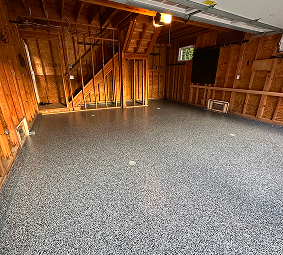
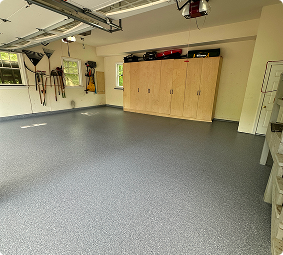
A residential kitchen floor coating gives Connecticut homeowners a seamless surface that removes one of the hardest parts of kitchen cleaning: grout lines. Properly installed epoxy kitchen flooring creates a continuous finish across the concrete, so cooking oil, juice, crumbs, muddy footprints, and everyday spills stay at the surface instead of collecting between tiles. For kitchens in West Hartford, Fairfield, and Glastonbury, the appeal goes beyond cleanup. A coated concrete floor can fit modern renovations, handle busy family traffic, and create the concrete-look finish many homeowners want without leaving the slab bare and porous.
Why Seamless Floors Change Kitchen Cleanup
Tile itself is usually easy to wipe. The joints between tiles create the extra work.
Food residue, dirty mop water, grease, and fine debris can settle along grout lines. Grout can also darken differently across traffic paths, around an island, and near the sink. A seamless floor removes those repeated joints from the main kitchen surface.
Our kitchen floor coatings create one continuous finished surface over properly prepared concrete. Routine cleaning becomes more direct because a mop or floor cleaner can move across the room without crossing hundreds of recessed grout lines.
That matters most in kitchens where cooking happens every day rather than only occasionally.
Connecticut Kitchens Put Floors Through More
Connecticut weather reaches the kitchen even though the floor sits indoors.
Winter brings road salt, grit, melted snow, and wet footwear through attached garages and entries. Spring rain adds muddy traffic. Summer humidity can raise indoor moisture levels, especially in older homes without consistent climate control.
Kitchens also create their own exposure. Dishwashers release heat and moisture, sinks splash, refrigerator dispensers drip, cooking sends oils onto the floor, and pets often eat or drink nearby.
A good seamless kitchen floor in CT needs to manage the combination rather than only look polished after installation.
No Grout Lines Means Fewer Cleaning Trouble Spots
A coated floor should not be confused with a floor that never needs cleaning.
It still collects crumbs, grease, pet hair, dust, and spills. The difference is how many seams and joints those materials can hide inside.
The CDC recommends routine cleaning of hard floors with soap, water, or a suitable cleaning product, with more intensive sanitation used when conditions require it. A seamless resin surface makes that ordinary cleaning process simpler because the main field of the floor does not contain porous grout joints.
The U.S. EPA also advises that flooring near water sources should resist water damage and limit moisture penetration through the surface.
That is highly relevant around sinks, dishwashers, refrigerators, and prep areas.
Spills Stay Visible Instead Of Disappearing
Kitchens create stains in small amounts over long periods.
A splash of tomato sauce lands beside the stove. Coffee reaches the area under an island stool. Cooking oil settles near the range. Juice gets missed under the edge of a cabinet.
Bare concrete can absorb some liquids. Grout can discolor. A properly selected resin coating gives spills a sealed surface instead.
The benefit is not that stains become impossible. Strong pigments, harsh chemicals, or neglected spills can still affect some finishes. The practical advantage is having time to clean the spill before it works into porous concrete or a network of grout joints.
Epoxy Kitchen Floors Need Proper Preparation
An attractive topcoat cannot compensate for poor bonding underneath.
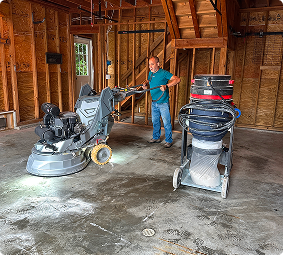
Before installing an epoxy kitchen floor, we evaluate the concrete for contamination, previous adhesives, old coatings, cracks, weak areas, and moisture concerns. Mechanical preparation then creates the profile needed for the coating system.
This step becomes especially important during Connecticut renovations. Removing tile, vinyl, or another old finish can reveal adhesive residue, patch material, cracks, or different concrete conditions across the same room.
EpoxyMize’s kitchen flooring process already places surface preparation ahead of color and finish selection because the bond to the slab determines whether the finished floor can perform properly.
Renovation Timing Matters Around Cabinets
Kitchen floor coatings need to be planned with the rest of the remodel.
Cabinets, islands, appliances, trim, plumbing, and adjacent rooms all affect access to the slab. Coating before permanent cabinetry is installed can create a continuous finish underneath the full footprint, but project sequencing depends on the specific renovation.
Existing kitchens require more detailed edge work.
We prepare and coat around fixed islands, cabinet toe kicks, thresholds, vents, and other permanent features that will remain. These details matter because a kitchen floor is viewed from much closer range than a garage floor.
The transitions need to look intentional when the rest of the renovation is complete.
Concrete Looks Fit Modern Connecticut Renovations
Many kitchen remodels now use fewer visual breaks.
Large islands, flat-panel cabinets, natural wood, warm whites, darker stone, and open layouts work well with a continuous floor. A modern kitchen floor coating can extend that same clean visual approach across the room.
Epoxy does not need to look like a glossy industrial floor.
Color, sheen, decorative effects, fine aggregate, and system choice can produce finishes that range from understated gray to warmer concrete-inspired tones. The floor can support the kitchen instead of becoming its loudest design feature.
For homeowners who want the concrete itself to remain visible, polished concrete may offer another route.
Coating And Polished Concrete Are Different Looks
Both approaches can create a modern concrete-based kitchen, but they achieve it differently.
Polished concrete develops the existing slab itself through grinding, honing, and polishing. The finished character depends heavily on the concrete below, including aggregate exposure, old repairs, discoloration, and previous construction work.
A coating gives us more control over color and surface consistency.
That can make epoxy flooring a better fit when a kitchen renovation uncovers concrete with patching, stains, or other visual differences that the homeowner does not want exposed.
The slab should guide the decision rather than the trend alone.
What Happens When A Pan Hits The Floor?
No residential floor is immune to impact.
A heavy cast-iron pan, sharp metal utensil, or another dense object can damage many flooring materials when dropped with enough force. Tile can crack or chip. Wood can dent. A resin coating can also gouge or mark under severe impact.
The advantage of a professional coating system lies in having a bonded surface over a solid concrete substrate rather than brittle individual tiles with repeated joints.
Normal kitchen traffic, chairs, stools, pet movement, and routine dropped utensils fall into a different category from heavy point impacts.
Homeowners who cook frequently should discuss how the room is used before we select the finish.
A Smooth Kitchen Floor Still Needs Grip
Kitchen flooring creates an important tradeoff.
More texture can improve footing around occasional wet areas. Too much texture can make grease and crumbs harder to remove.
A residential kitchen generally does not need the aggressive profile used in some industrial or continuously wet environments. The finish should remain comfortable underfoot and easy to mop while providing suitable traction for the room.
Sink locations, exterior doors, pet bowls, dishwasher placement, and household habits can influence the final texture choice.
This is where kitchen concrete floor finish selection becomes more useful than simply asking for “epoxy.”
Comfort Depends On More Than The Coating
Concrete-based flooring feels different from wood, cork, or cushioned vinyl.
The slab underneath remains firm, so a coating will not turn concrete into a soft floor. Homeowners who spend long periods cooking may prefer cushioned mats near the sink, island prep station, or range.
Temperature can matter as well.
Connecticut winters can make slab floors feel cooler, particularly in homes where the kitchen sits above an unconditioned space or directly on a slab. Radiant floor heating, room insulation, sunlight, and indoor temperature all affect the experience.
The coating itself remains thin enough that the character of the underlying concrete still matters.
Open Kitchens Need The Next Room Considered
Many Connecticut kitchens connect directly to dining and living spaces.
Changing flooring at the kitchen boundary can create an awkward visual break, especially in open renovations. A continuous coating can sometimes extend beyond the kitchen when the adjoining slab and room use support it.
Our living room floor coatings give homeowners another option when the same concrete continues into an open living area.
Finish decisions then become broader. Sheen, color, sunlight, furniture, rugs, and cleaning habits matter across the combined space instead of only around kitchen appliances.
A connected floor should look planned from every viewing angle.
West Hartford Homes Need Design Flexibility
West Hartford contains a wide range of housing ages and architectural styles.
Some remodels preserve traditional cabinetry and millwork while opening the kitchen layout. Others move toward cleaner contemporary interiors. The floor needs enough design flexibility to work with either direction.
A neutral concrete-inspired coating can sit quietly beneath wood cabinetry and stone counters. A more decorative finish can give a simpler kitchen additional movement.
Homeowners planning projects in the area can explore our West Hartford epoxy flooring services for coating options tied to the actual slab and renovation plan.
Fairfield And Glastonbury Kitchens Differ Too
One coating specification should not be copied across every Connecticut home.
Fairfield kitchens can deal with coastal humidity and properties where kitchen, patio, mudroom, and pool traffic overlap during summer. Glastonbury homes often see four-season entry traffic, with winter residue reaching kitchens from attached garages and mudrooms.
Room layout changes exposure as much as geography does.
A kitchen beside an exterior door sees a different floor load than an interior kitchen buffered by a mudroom. Homes with children, dogs, frequent cooking, or large islands create their own traffic patterns.
We look at those patterns before deciding how smooth, decorative, or protective the system should be.
Is A Coated Kitchen Floor Practical For Families?
Yes, when the concrete and coating system suit the room. A seamless surface handles crumbs, drink spills, pet traffic, chairs, and frequent mopping without grout joints across the main floor. Families should still clean spills promptly and use suitable cleaning products. Surface texture can also be adjusted around the household’s needs.
How Does It Compare To Tile For Cleaning?
Tile has a durable surface, but grout creates repeated joints that often need more attention. A coated concrete floor removes those lines and gives a mop one continuous surface to cross. Cleaning still depends on the selected finish, since overly aggressive texture can hold more grease and fine debris than a smoother residential coating.
Will Dropped Pots And Pans Chip The Surface?
A coating can be damaged by a severe impact, just as tile can chip and wood can dent. Ordinary utensils and daily kitchen traffic are less concerning than very heavy objects landing on a sharp edge. System thickness, topcoat choice, substrate condition, and the force of impact all affect the result.
Can The Finish Match Modern Kitchen Designs?
Yes. Residential coatings are not limited to bright industrial colors or high-gloss finishes. Neutral grays, warmer concrete tones, subtle decorative blends, and lower-sheen finishes can work with modern cabinetry, natural wood, stone counters, and open layouts. Samples should be viewed alongside the actual kitchen materials and lighting before a final choice.
Is The Surface Comfortable While Cooking?
The finished surface is firm because the concrete remains underneath it. Some homeowners like that solid feel, while people who cook for long periods may use cushioned mats at prep areas. The floor can also feel cooler during Connecticut winters, depending on slab location, insulation, radiant heat, sunlight, and room temperature.
How Is A Kitchen Coated Around Cabinets?
Existing fixed cabinets and islands remain protected while we prepare and coat the accessible slab around their edges. New renovations may allow different sequencing before permanent cabinetry goes in. Toe kicks, thresholds, appliances, vents, and transitions need careful detailing because kitchen edges remain visible and become part of the finished room.
Explore A Seamless Kitchen Before Choosing Tile
A kitchen floor influences cleaning long after the renovation photos are taken. Grout joints, stain behavior, furniture movement, winter traffic, and the area around sinks and appliances become more important after several years of use than they seem during material selection.
EpoxyMize can evaluate the concrete, show finish options, and plan the coating around cabinets, islands, adjoining rooms, and the way the kitchen is actually used. For homeowners in West Hartford, Fairfield, Glastonbury, and surrounding Connecticut communities, a design consultation is the best point to compare a seamless coated floor against tile, polished concrete, and other finishes before the renovation is locked in.