Skip to content
The best country floor for a Litchfield Hills barn or garage is usually a professionally prepared epoxy, flake, quartz, polyaspartic, or grind-and-seal system selected for that specific building. There is no single coating that fits every country property.
A heated garage in Washington may suit a decorative flake floor. An unheated equipment barn in Litchfield may need a different cure schedule and surface profile. A Roxbury carriage house may call for quiet earth tones instead of a bright industrial finish. Before recommending a barn floor coating in Connecticut, we inspect the slab, temperature conditions, moisture signs, traffic, and character of the property.
Start With The Building, Not The Finish
Country properties often contain several concrete spaces built decades apart. The main garage may have a newer reinforced slab. The barn may have patched concrete from different periods. A carriage house could contain an early slab poured over stone, soil, or an unknown base.
Those floors should not receive identical specifications.
The right system depends on whether the building stores vehicles, tractors, tools, firewood, feed, lawn equipment, or household items. It also matters whether the space has heat, receives direct sunlight, stays closed for much of the week, or sees muddy traffic through large barn doors.
Our garage floor coatings begin with a review of those conditions. We determine what the concrete can support before discussing color, flakes, gloss, or installation speed.
Full Flake Floors For Finished Garages
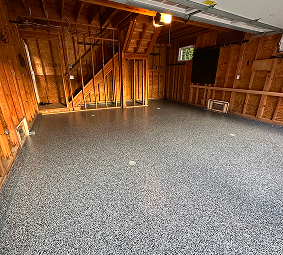
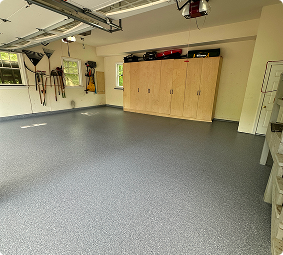
A full flake floor is often the strongest visual fit for a finished country home garage.
The varied pattern hides dried mud, fine gravel, leaf fragments, sawdust, salt specks, and light tire marks better than a flat solid color. That matters on wooded or unpaved properties where outdoor debris enters each time a vehicle, mower, or utility cart moves through the door.
Flake floors can also complement older homes without copying the look of a commercial shop. Warm gray, taupe, brown, charcoal, and granite-style blends tend to sit comfortably beside fieldstone walls, natural wood, painted trim, and traditional architecture.
Very bright blue, high-contrast black-and-white, or glossy showroom palettes may feel out of place in an antique property. The better approach is to choose a blend that relates to the stone, siding, timber, or surrounding rooms.
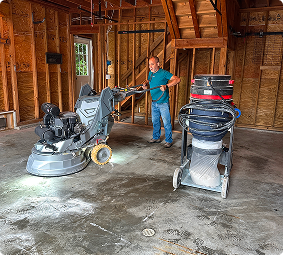
A professional flake system may include a prepared concrete surface, pigmented base coat, full decorative broadcast, and protective clear topcoat. The exact layer sequence depends on the slab and selected products.
Epoxy Flooring For Workshops And Storage Barns
Epoxy flooring remains a practical option for enclosed barns used as workshops, equipment rooms, hobby spaces, or vehicle storage.
A properly prepared epoxy floor coating creates a sealed surface that is easier to sweep and clean than dusty bare concrete. It can help prevent concrete powder from settling over tools, boxes, mechanical equipment, and seasonal furniture.
Workshops need more than an attractive finish. Rolling tool chests, jack stands, workbenches, metal shelving, and tractor attachments place concentrated loads on the floor. The coating system must suit those uses, and the slab beneath it must remain sound.
An epoxy flooring company should also ask what work happens inside. A woodworking barn has different needs from a vehicle workshop. A space used for welding, grinding, or heavy fabrication may require added protection or a different flooring recommendation.
Epoxy is not automatically the right choice for every agricultural building. We base the recommendation on use, slab condition, and exposure instead of forcing one product into every barn.
Quartz For Wet Entries And Utility Areas
Quartz flooring can suit utility spaces where added texture matters more than easy sweeping.
A quartz broadcast uses small colored aggregate rather than larger decorative flakes. It can create a more uniform surface with a finer, denser appearance. That may suit mudrooms connected to garages, wash areas, kennel spaces, tack rooms, or barn entries that receive wet footwear.
Texture requires balance. A very smooth coating cleans easily but may feel slick when covered by water, snow, or mud. A heavily textured finish may offer more traction but can hold fine debris and take longer to mop.
The installer should match texture to the actual hazard. More aggregate does not always mean a better floor. A carriage house used for clean vehicle storage does not need the same surface feel as an active utility barn.
Grind And Seal For A Quieter Country Look
Some Litchfield Hills buildings do not need a colorful broadcast floor.
Grind and seal exposes the natural concrete surface and protects it with a clear sealer. It can suit converted barns, carriage houses, studios, and restrained interiors where the owner wants to retain some variation, old repairs, and age marks.
The finished appearance depends heavily on the existing slab. Grinding may reveal aggregate, patch lines, stains, old cracks, color changes, and differences between separate concrete pours. Those features become part of the floor rather than disappearing beneath an opaque coating.
That unpredictability can work well in a casual barn conversion. It may be less suitable when the owner expects a uniform floor.
Grind and seal also differs from epoxy flooring in chemical resistance, build thickness, and repair coverage. We compare the systems based on the floor rather than presenting them as interchangeable finishes.
Old Slabs Need More Investigation
An older barn slab may not behave like concrete in a newer attached garage.
Some outbuildings contain several pours separated by visible seams. Others have thin edges, rough patches, embedded metal, hand-finished sections, or concrete placed directly beside a stone foundation. A newer-looking patch may hide a drain, trench, former stall divider, or previous repair.
Grinding exposes weak surface material and helps reveal what remains firmly bonded. Loose patches and failing paint must come off before a coating can form a reliable connection with the concrete.
Moisture also deserves attention. Older carriage house slabs may have no modern vapor barrier underneath. Damp soil, poor drainage, blocked gutters, hillside runoff, and seasonal groundwater can all contribute to moisture movement.
A dark floor or musty building does not confirm a moisture problem by itself. The slab must be inspected, and testing may be appropriate when visible signs raise concern.
Unheated Buildings Change The Schedule
An unheated barn cannot be scheduled like a climate-controlled garage.
Coating products have minimum application temperatures and defined curing ranges. The slab temperature matters as much as the air temperature. Briefly warming the room does not always heat a cold concrete mass enough for proper installation.
Northwestern Connecticut regularly receives snow, sleet, freezing rain, and extended cold. National Weather Service records include southern Litchfield County temperatures falling below zero during major winter cold events.
Cold can slow curing and alter the working time of the coating. Condensation can also form when warm, moist air reaches a cold slab. We review the forecast, indoor conditions, product limits, and expected overnight temperatures before committing to an installation window.
Temporary heat may help in some buildings, but it must warm the space safely and consistently. The floor also needs protection after the final coat while it reaches the required cure.
Spring, summer, and early fall often provide wider installation windows. Even then, cool nights and humid mornings can affect detached buildings in shaded valleys.
Weekend Homes Need A Different Schedule
Many Litchfield Hills properties do not operate on a normal weekday routine.
Owners may arrive on Friday evening, leave Sunday afternoon, and return several weeks later. Contractors, caretakers, landscapers, and property managers may share access. The garage might contain vehicles that cannot remain outside during the entire project.
We plan weekender scheduling around access, clearing, cure time, and the owner’s return date. The floor should be empty before preparation starts. Heavy cabinets, loose equipment, tires, firewood, garden supplies, and stored furniture need another location.
The selected system also affects when people can walk on the floor and when vehicles can return. Faster-curing products may reduce downtime, but speed should never replace proper concrete preparation.
For owners who cannot attend each phase, clear photo updates and defined access arrangements help keep the work moving. The consultation should settle these details before the installation date.
Carriage Houses Need Restrained Finishes
Historic Litchfield County contains many surviving barns, garages, and carriage houses. National Register records for the region document nineteenth-century barns, secondary buildings, and carriage houses that remain part of established properties.
The floor finish should respect that setting.
A coating does not need to imitate old stone or timber. It simply needs to avoid competing with them. Mid-tone gray, weathered brown, muted sandstone, charcoal, and blended neutral palettes can look more natural than bright solid colors.
Gloss level matters too. A mirror-like floor can seem disconnected from hand-hewn beams, aged brick, and fieldstone. A lower-sheen finish often feels quieter, though available gloss levels depend on the coating system.
Existing wood walls, original doors, and stone foundations also need protection during grinding and application. Dust control, edge work, ventilation, and careful masking become especially important in finished or historically sensitive outbuildings.
Horse Properties Need Use-Specific Floors
A horse property floor coating should be selected by zone.
A tack room, feed room, wash area, barn office, equipment bay, and stall aisle do not create the same demands. Hoof traffic, bedding, water, manure, cleaning chemicals, and rubber mats can change what the surface needs to handle.
Coated concrete may suit tack rooms, utility rooms, storage rooms, and selected aisles when the system provides suitable texture and the cleaning routine supports it. Horse stalls often need dedicated equine flooring or thick mats over an appropriate base rather than a standard decorative garage coating.
Drainage and traction deserve special attention in wash areas. A seamless coating cannot correct a floor that pitches away from the drain or contains deep low spots. Those conditions may need concrete correction first.
We define the intended zone during the consultation instead of treating the entire barn as one flooring project.
Country Garages Carry Different Debris
A country home garage receives material that suburban garages may see less often.
Crushed stone, wet leaves, soil, grass clippings, bark, road sand, deicing salt, and fine gravel enter on tires and footwear. Snowmelt can sit near the door when the floor has shallow depressions or limited drainage.
Connecticut transportation and environmental guidance identifies road salt as a material that can damage concrete and requires controlled handling. A coating can reduce direct exposure of the finished slab, but it does not eliminate the need to remove saltwater and abrasive grit.
Regular sweeping prevents stones and sand from grinding under tires. A soft mop or squeegee can remove snowmelt. Harsh cleaners are rarely needed for routine maintenance.
A medium flake blend often disguises light debris between cleanings. Very dark floors tend to show road salt. Very pale floors can reveal mud, tire marks, and leaf stains more quickly.
The Best Floor Depends On The Property
A finished country garage may benefit from a full flake epoxy system. A wet utility area may call for quartz texture. A converted carriage house may look better with grind and seal. An equipment barn may need a more restrained, work-focused system.
The wrong decision usually starts with choosing from a color sample before examining the concrete.
Our consultation covers slab age, repairs, moisture signs, heat, building access, traffic, cleaning, finish preference, and project timing. We then explain which epoxy flooring services or concrete coatings make sense for that space.
Property owners can review our work across Litchfield, Washington, and Roxbury before planning their project.
Litchfield Hills Floor Coating FAQs
Can Epoxy Be Installed In An Unheated Barn?
Yes, but the slab and air must remain within the coating manufacturer’s required temperature range. Cold concrete can slow curing, affect application, and create condensation risks. We inspect the building and select a suitable installation window.
What Is The Best Floor For A Carriage House?
Full flake epoxy, grind and seal, and selected polyaspartic systems can all suit a carriage house. The best choice depends on the slab, vehicle use, desired sheen, sunlight, heating, and character of the building.
Can A Barn Floor Coating Handle Tractor Traffic?
A professional coating may handle normal tractor and equipment traffic when the slab is sound and the system suits the load. Sharp attachments, dragging metal, tire chains, and concentrated point loads may still damage a coated surface.
Should Horse Stalls Have Epoxy Flooring?
Standard decorative epoxy is not always the best exposed surface for horse stalls. Stall mats or equine flooring may provide more suitable comfort and traction. Epoxy coatings may fit tack rooms, feed rooms, storage areas, offices, and selected aisles.
Will Epoxy Hide Repairs In An Old Barn Slab?
An opaque epoxy system can reduce color differences between patches, but it cannot make every crack, joint, depression, or uneven section disappear. Repairs must be assessed before coating, and some slab history may remain visible.
How Long Must A Weekend Home Garage Stay Empty?
The required time depends on preparation, coating type, temperature, and cure conditions. Some systems return to service faster than others. We give owners a clear schedule for clearing the garage, foot traffic, storage replacement, and vehicle return.
Book A Litchfield Hills Property Consultation
Barns, garages, carriage houses, and country outbuildings need individual recommendations. Their slabs may differ in age, temperature, moisture exposure, condition, and daily use even when they stand on the same property.
We provide on-site consultations across the Litchfield Hills. We inspect the concrete, discuss how each building functions, review suitable finishes, and plan around seasonal or weekend access.
Book your country property consultation with EpoxyMize and receive a clear flooring recommendation for your Litchfield, Washington, Roxbury, or nearby Connecticut property.